
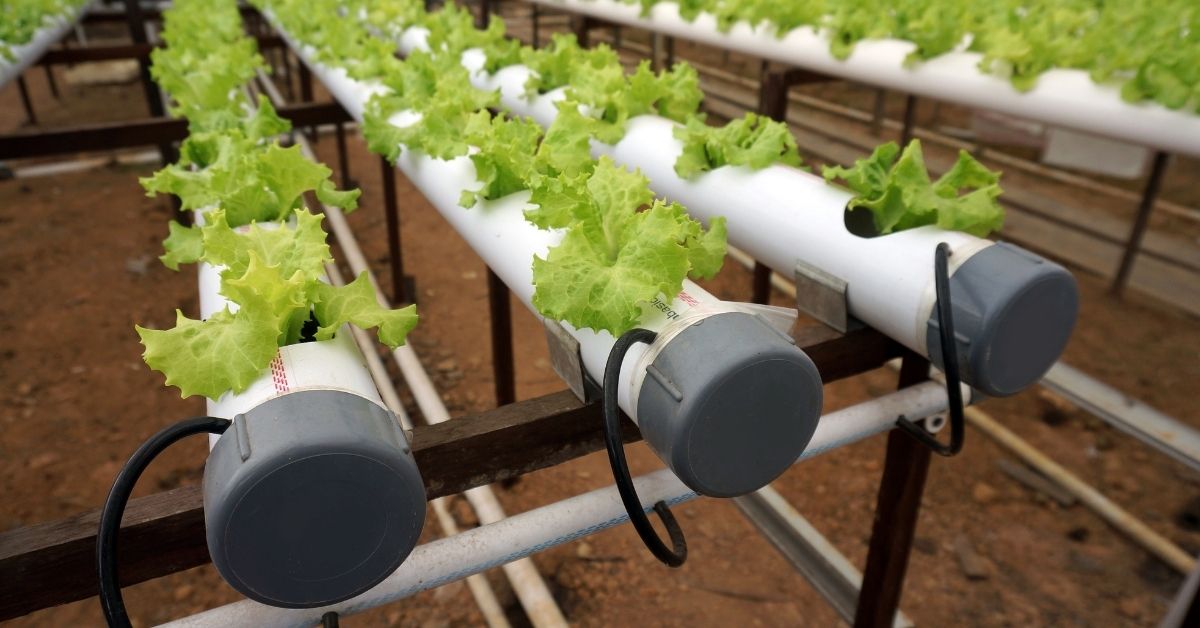

On a compact plot of land at St. Kizito High School in Namugongo, rows of leafy greens grow without soil, fed by nutrient-rich water circulating through solar-powered hydroponic systems. What might look like an experimental garden is, in fact, a working classroom where students are learning how food production, energy use and waste reduction intersect in a country where climate pressure and post-harvest losses continue to strain livelihoods.
The project, developed at St. Kizito High School Namugongo, forms part of a broader Green Innovations Park integrated into the school’s curriculum. It brings together hydroponics, renewable energy, food preservation and small-scale processing, allowing students to move from growing crops to storing and adding value to them within the same system. School administrators say the goal is to ground sustainability education in practical skills rather than theory alone.
Uganda’s dependence on agriculture remains deep, with the sector employing more than half of the workforce. Farming is however, increasingly exposed to erratic rainfall, land fragmentation and rising input costs. At the same time, post-harvest losses, often estimated at around 30 percent for fruits and vegetables, undermine incomes and food availability. The school’s approach reflects an effort to address these challenges at the level of education, equipping students with tools and thinking aligned with a changing food system.
The hydroponic units at St. Kizito rely on controlled environments that use significantly less water than conventional cultivation. Nutrients are delivered directly to plant roots, reducing waste and shortening growth cycles. Solar panels power pumps and lighting, lowering operating costs and reinforcing lessons on clean energy. For students, the systems demonstrate how technology can compensate for land scarcity and climate variability, particularly in urban and peri-urban settings.
Production is only part of the lesson. Adjacent to the growing units are small food preservation and processing setups where students learn basic drying, packaging and handling techniques. Produce harvested from the hydroponic systems is processed to extend shelf life, reducing spoilage and creating products that could fetch higher prices in local markets. Teachers involved in the programme say this link between farming and value addition helps students understand agriculture as a business rather than a subsistence activity.
The initiative gained wider attention after being featured on a national television innovation programme, highlighting how schools can act as testing grounds for sustainability ideas often associated with startups or research institutions. While hydroponics and solar power are not new in Uganda, their integration into a secondary school curriculum remains relatively rare. Education officials and practitioners say such exposure can reshape how young people perceive agriculture, positioning it as a field for innovation and entrepreneurship.
Students involved in the project are introduced to basic record-keeping, tracking inputs, yields and potential revenues. These exercises are designed to show how efficiency, waste reduction and energy choices influence profitability. In a country grappling with youth unemployment, the emphasis on enterprise is deliberate. School leaders argue that practical sustainability skills can widen career options, whether in agribusiness, renewable energy or food processing.